
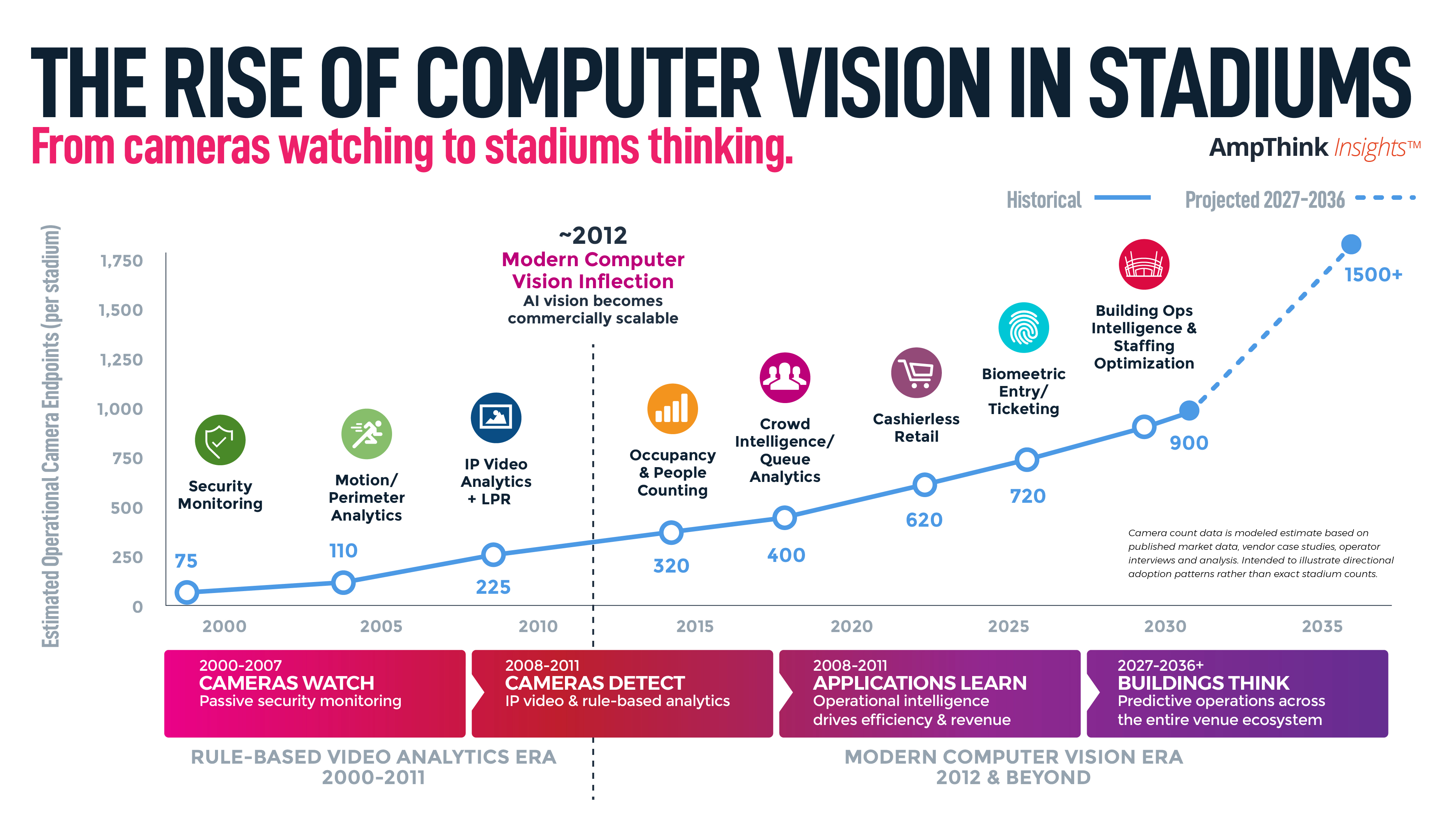
Computer vision may be easiest to understand as a history of changing questions.
By the 1960s, researchers working in the emerging field of artificial intelligence had begun asking an ambitious question: could computers understand what they see the way humans do? At the time, the ambition exceeded the technology. Computing power was limited, cameras were primitive, and software could process images, but understanding remained out of reach.
As technology improved, so did the questions. In manufacturing, the focus became practical: could cameras help identify defects or guide robotics? Later, in surveillance and operations, the question evolved again: could software detect motion, count people, recognize license plates, or identify unusual conditions automatically?
Each stage reflected both imagination and technical limits. The questions only became answerable once cameras, computing, storage, and software evolved enough to support them.
Around the 2010s, AI changed the equation again. Suddenly, cameras could do more than detect. Software could begin interpreting context: congestion, occupancy, crowd movement, behavioral patterns, queue conditions, and operational activity.
Which brings stadiums to what may be the next question: how can visual data help venues save money or make money?
Many owners may already be experimenting with answers without calling it computer vision: queue management, crowd flow, staffing visibility, frictionless entry, parking analytics, cashierless retail, and occupancy monitoring.
It is important to recognize that cameras themselves are only part of the story. Cameras are increasingly sensors used to collect data, and one camera feed can support many applications at once. AI turns what cameras see into operational signals.
Another enabling technology is quietly becoming important here: converged infrastructure. As stadium systems increasingly operate across shared IP networks, signals from computer vision can begin interacting with ticketing, staffing, concessions, signage, mobile apps, HVAC, lighting, and historical operating patterns.
The result is an opportunity to connect visual intelligence with operational decisions in ways that reduce friction, improve efficiency, enhance personalization, and ultimately improve business outcomes.

Garland, TX 75042