
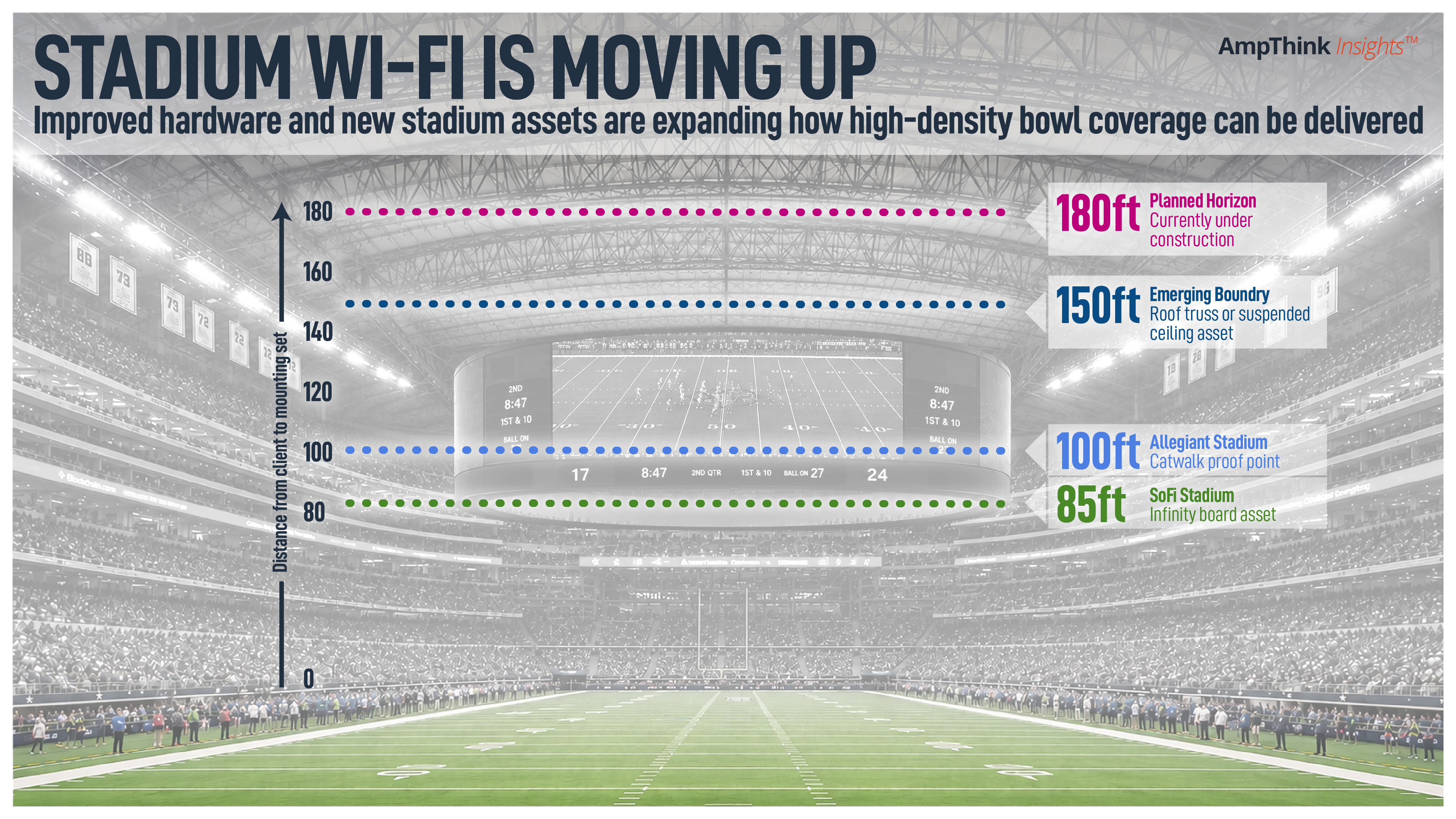
Within the next few years, it may be possible to hang Wi-Fi antennas roughly 180 feet above fans in a stadium seating bowl.
That is more than twice the height of some early overhead stadium Wi-Fi designs. It may seem like a technical detail, but it highlights a Wi-Fi design nuance many people miss.
Before designers can solve for RF performance, channel reuse, or capacity, they have to answer a more basic question: where can the hardware go? What infrastructure is available for antenna placement?
The answer keeps evolving because the hardware keeps improving.
As hyper-directional antenna systems become more capable, they can focus coverage on seating areas from farther away. That makes more stadium assets viable: scoreboards, catwalks, roof trusses, canopies, suspended structures, and other overhead infrastructure that may have been too high or too distant for earlier designs.
As Wi-Fi antennas move up, they can change more than coverage strategy. They can change the economics of Wi-Fi coverage as well.
High-density Wi-Fi requires significant investment, and the cost is not limited to equipment. Installation is a complicated construction project. After installation, Wi-Fi networks require attentive maintenance and regular upgrades. Antenna location affects each of those decisions.
Every venue presents different constraints, but better use of overhead assets can give owners more options. In the right building, overhead placement can reduce field complexity, simplify installation, improve serviceability, and create a cleaner path for future capacity growth.
That is why the 180-foot milestone matters. Stadium Wi-Fi is moving up because better antennas can turn more overhead stadium assets into viable coverage locations, giving owners more flexibility in how networks are built, maintained, and upgraded. In some venues, it may also make reliable field-level Wi-Fi more practical, expanding what the network can support beyond the seating bowl.

Garland, TX 75042